
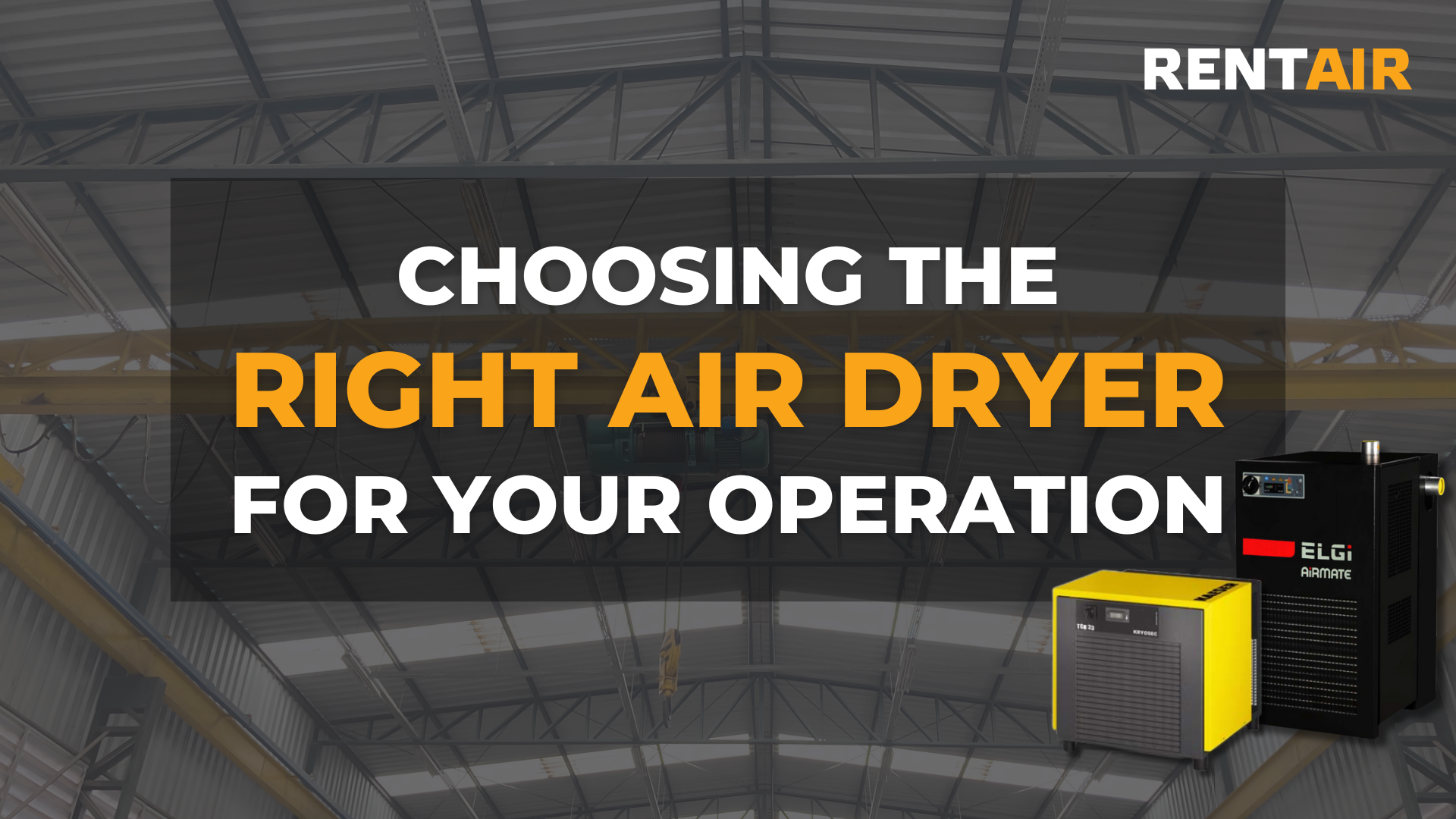
Compressed air systems are integral to many industries, and a crucial component of these systems is the air dryer. Air dryers remove moisture from compressed air, preventing damage to equipment, product contamination, and system inefficiencies. Choosing the right air dryer for your operation is essential to maintaining the longevity and performance of your compressed air system. In this guide, we’ll walk you through the different types of air dryers and the key factors to consider when selecting the best option for your needs.
Types of Air Dryers
Refrigerated Air Dryers
Refrigerated air dryers are a popular choice for general industrial applications. They work by cooling the compressed air to condense the moisture, which is then removed from the system. These dryers are suitable for operations where the air quality requirement is not highly stringent, such as in automotive workshops or manufacturing. However, they may not be ideal for environments requiring ultra-dry air, as their dew point performance is limited.
Key Benefits:
- Cost-effective for general industry use
- Low maintenance
- Suitable for non-critical applications
Limitations:
- May not meet the air quality standards required for highly sensitive applications
- Less effective in environments with extreme temperature fluctuations
Regenerative Desiccant Air Dryers
Desiccant air dryers are designed for more demanding environments, such as food processing, pharmaceuticals, and critical manufacturing processes. These dryers use desiccant materials to absorb moisture from the air, achieving a much lower dew point than refrigerated dryers. This makes them ideal for applications that cannot tolerate any moisture in the compressed air.
Key Benefits:
- Extremely low dew points, suitable for sensitive environments
- Reliable in cold and fluctuating temperatures
- Long-lasting performance in demanding applications
Limitations:
- Higher energy consumption compared to refrigerated dryers
Membrane Air Dryers
Membrane air dryers are used in niche applications, especially where space is limited or portability is required. These dryers use selective membrane technology to separate moisture from the air. Membrane dryers are commonly found in medical devices, laboratories, and other sensitive equipment.
Key Benefits:
- Compact and portable
- Ideal for low-flow applications
Limitations:
- Limited to specific, low-volume applications
- Generally higher cost per volume of air dried

Factors to Consider When Choosing an Air Dryer
Air Quality Needs
Different industries have varying air quality requirements. For example, industries like food, beverage, and pharmaceuticals must adhere to strict ISO air quality standards. Ensuring that your air dryer meets the necessary air dryness level for your application is essential to avoid contamination and maintain compliance.
Compressor Size and System Capacity
The air dryer you choose must be appropriately sized to match your air compressor and system demands. An undersized dryer will not efficiently remove moisture, leading to potential equipment failure, while an oversized dryer can be unnecessarily costly.
Environmental Conditions
The operating environment can greatly affect the performance of an air dryer. High humidity or extreme temperatures may require a more robust air dryer, such as a desiccant dryer, to maintain performance and protect your system from moisture damage.
Energy Efficiency
Energy-efficient air dryers can help reduce operational costs, especially in large-scale industrial settings. Choosing a dryer that balances energy consumption with your air quality needs can significantly impact your bottom line.
Maintenance Requirements
If you are purchasing an air dryer, understanding the maintenance needs is crucial to minimising downtime. For those hiring an air dryer, one of the major benefits is that maintenance is typically handled by the rental provider, reducing your operational burden.

Why Renting From Rent Air is a Smart Choice
At Rent Air, we specialise in providing air dryers that suit a wide variety of industries and applications. Renting an air dryer offers flexibility, cost-effectiveness, and access to top-tier equipment without the long-term commitments of purchasing.
Key Benefits of Renting from Rent Air:
- Fast access to equipment under time constraints
- No long-term financial commitment
- Access to the latest air dryer technology
- Maintenance and servicing included
- Flexibility to scale up or down as your needs change
Choosing the right air dryer for your operation is crucial to maintaining an efficient and reliable compressed air system. At Rent Air, we offer a range of air dryers for hire, backed by industry expertise to help you find the best solution for your unique requirements. To learn more or to request a quote, visit Rent Air today!