
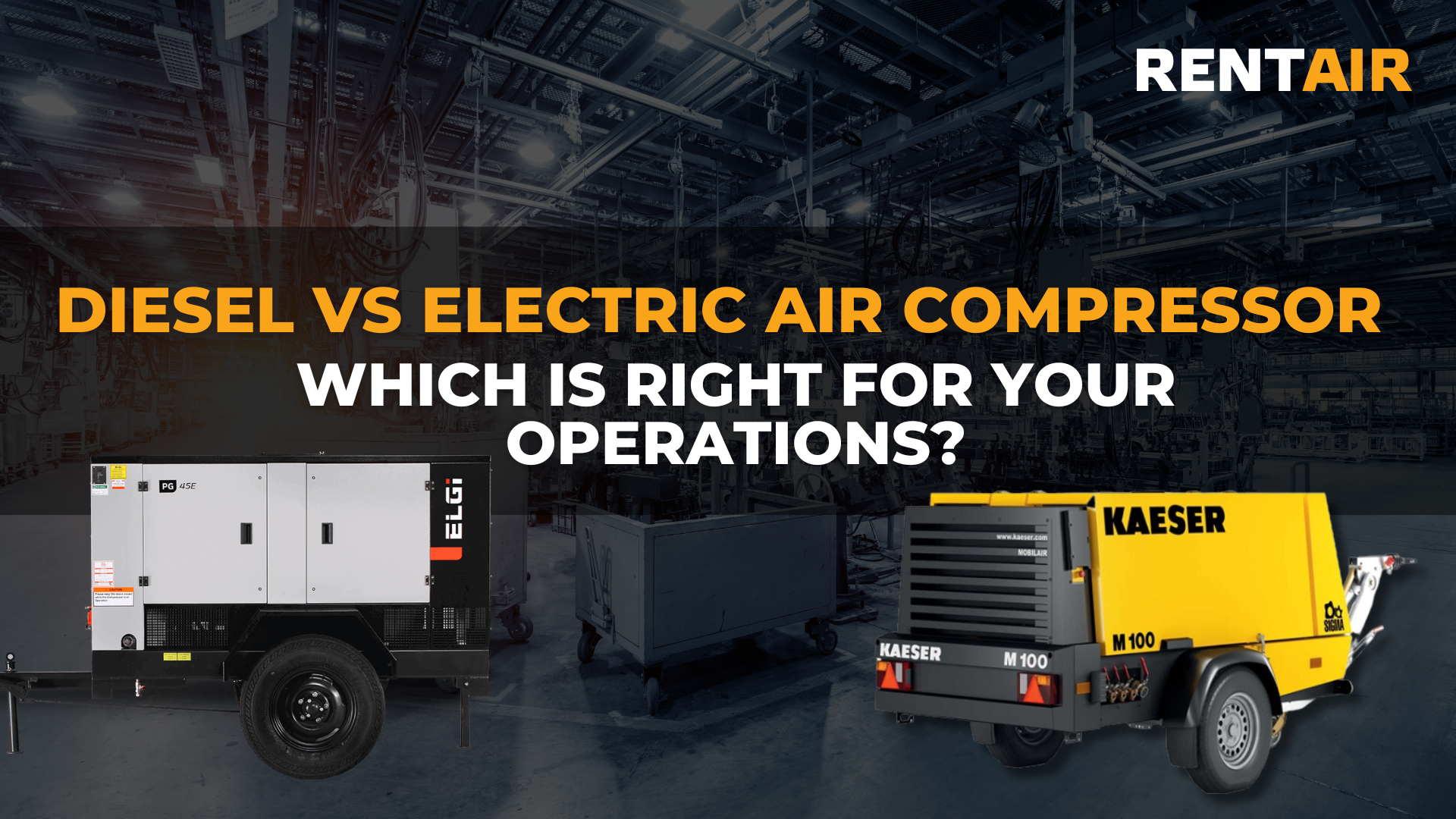
Choosing the most energy-efficient air compressor is crucial for any operations, as compressed air systems can represent a significant cost. One key decision is whether to opt for a diesel or electric air compressor. This decision isn’t always straightforward, as it depends heavily on factors like site location, power availability, local energy costs, and the specific application. Both diesel and electric compressors have their advantages and disadvantages, and the right choice will depend on your business’s unique needs. Below, we explore the key benefits and drawbacks of each to help you make an informed decision.
Advantages and Disadvantages of Diesel Air Compressors
Diesel air compressors have long been favoured for their durability, portability, and ability to operate without external power sources. They are especially useful on remote worksites, such as those found in the mining, oil & gas, and construction industries, where access to electricity may be limited. Diesel compressors can handle heavy-duty applications and are built to withstand harsh environments like those found across Australia.
However, despite advancements in technology, diesel compressors are typically less environmentally friendly than electric options due to higher emissions. While they remain a solid choice for tough jobs, businesses aiming for sustainability may need to weigh the environmental impact carefully.
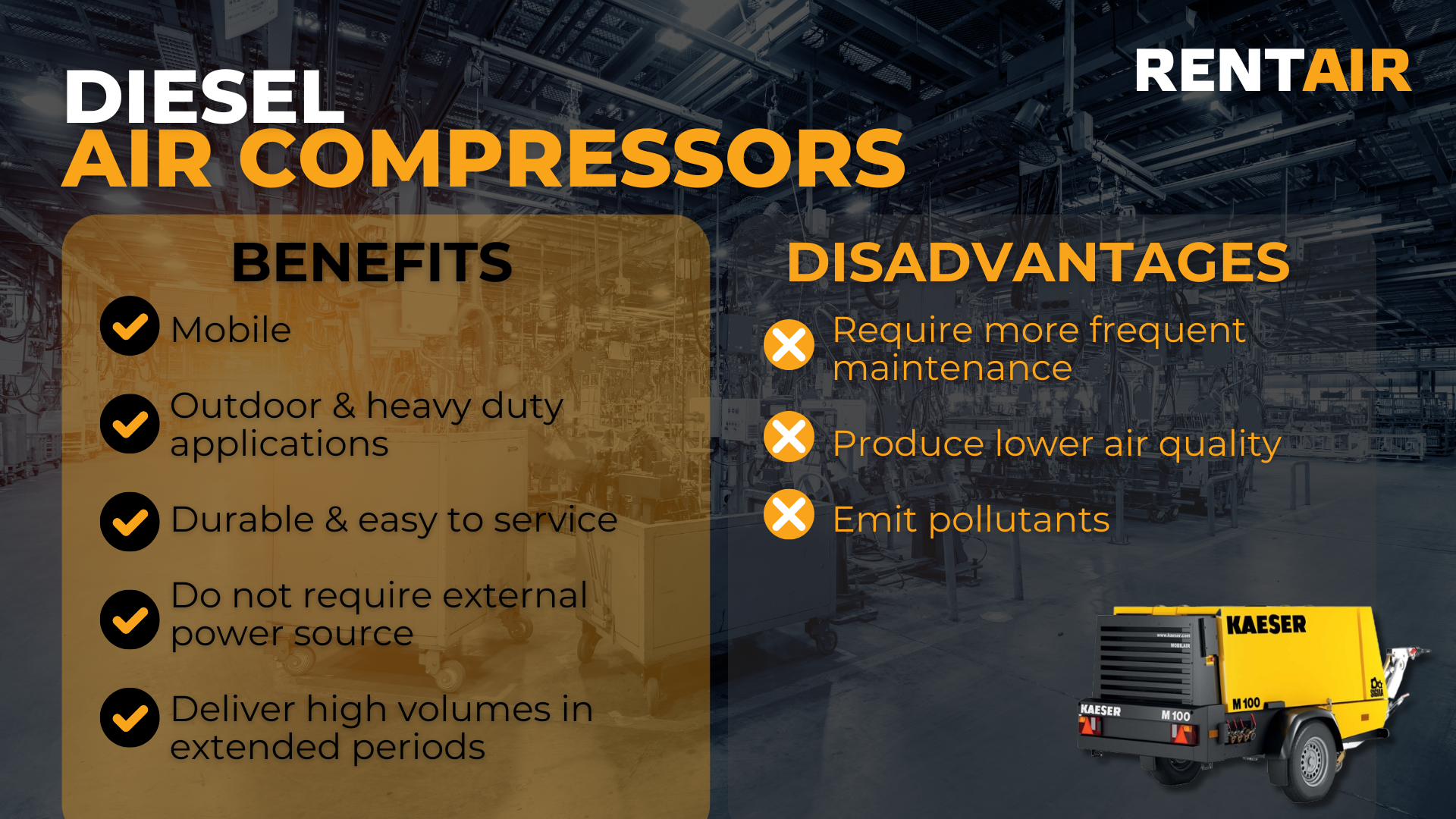
Benefits of Diesel Air Compressors
- Mobile and easily transported to remote or non-powered sites.
- Suitable for outdoor and heavy-duty applications.
- Long-lasting, durable, and easy to service.
- Do not require an external power source, making them ideal for non-powered sites.
- Capable of delivering high volumes of compressed air for extended periods.
Disadvantages of Diesel Air Compressors
- Require more frequent maintenance compared to electric compressors.
- Tend to produce lower air quality due to increased condensation levels.
- Emit pollutants like carbon dioxide and nitrogen oxides, contributing to your carbon footprint.
Advantages and Disadvantages of Electric Air Compressors
Electric air compressors are increasingly popular, particularly for their energy efficiency and environmental friendliness. They are ideal for businesses with stable power sources and indoor applications, as they produce minimal noise and zero emissions. This makes them a strong choice for industries like manufacturing, food & beverage, medical, and water treatment, where maintaining a clean, quiet environment is essential.
Electric compressors also have the advantage of lower running costs. They require less maintenance, have fewer moving parts, and offer consistent performance without the need for refuelling.
The main drawback of electric compressors is their reliance on a power source. For remote or off-grid locations, where power may not be available, diesel compressors remain the preferred option.
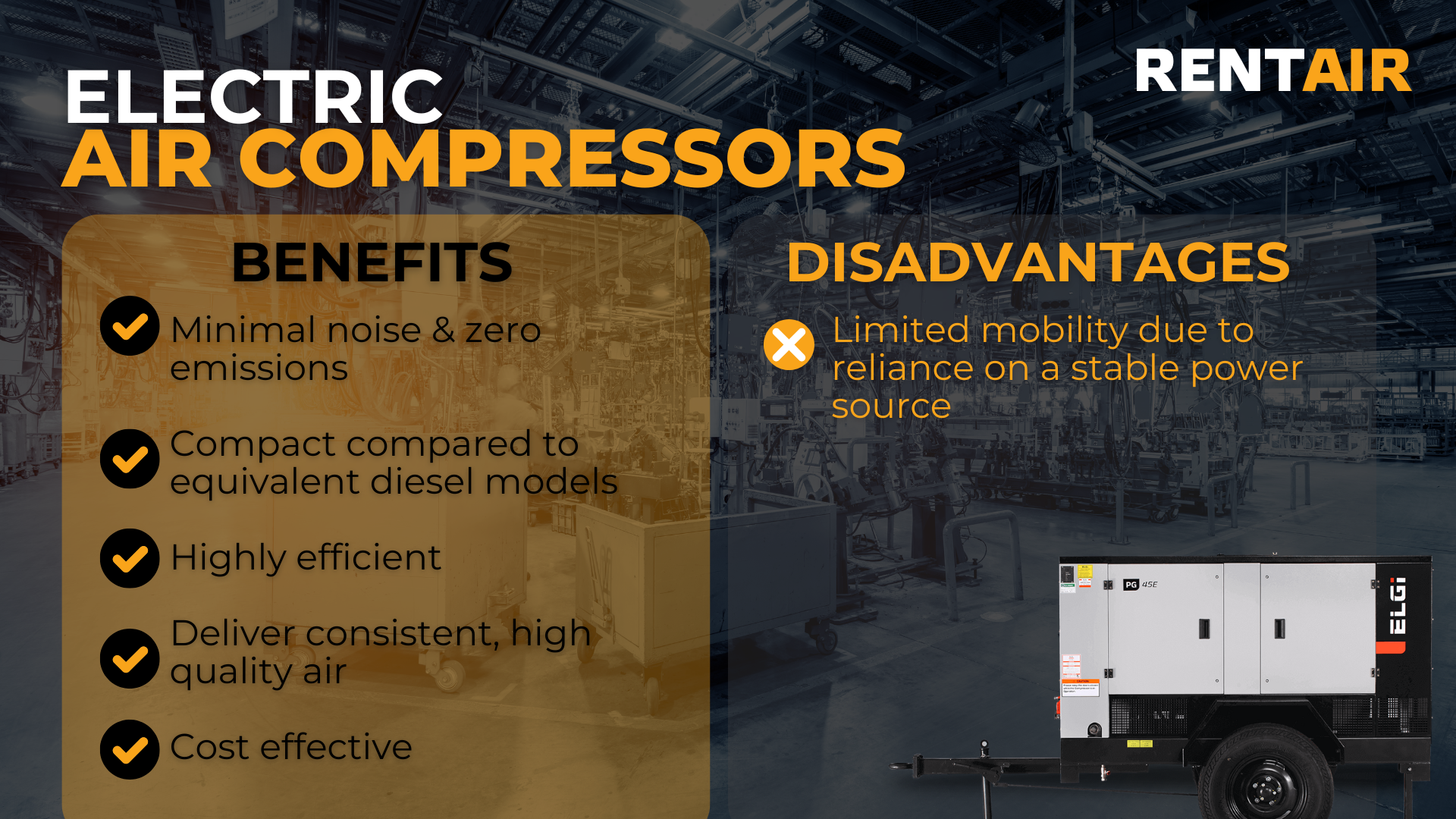
Benefits of Electric Air Compressors
- Minimal noise and zero emissions, making them suitable for indoor and noise-sensitive environments.
- More compact compared to equivalent diesel models.
- Highly efficient, especially with variable-speed models.
- Deliver consistent, high-quality air.
- Cost-effective in both upfront and ongoing operational costs.
Disadvantages of Electric Air Compressors
- Limited mobility due to reliance on a stable power source, making them less suitable for off-grid locations or sites with power instability.
Choosing the Right Compressor for Your Business
When deciding between a diesel and electric air compressor, consider key factors like mobility, power availability, operating costs, environmental impact, and the application. Diesel compressors are ideal for rugged, outdoor tasks where mobility is essential, while electric compressors are better suited to indoor or environmentally sensitive applications where noise and emissions need to be controlled.
In conclusion, the choice between diesel and electric compressors depends on your specific operational requirements. For businesses looking for a clean, energy-efficient solution, electric compressors are the best choice. If you require a tough, mobile compressor for remote applications, diesel is likely the way to go.
Not Sure Which Compressor to Commit To?
If you’re not ready to commit to purchasing a compressor, renting from Rent Air is a flexible and cost-effective solution. Hiring allows you to access the equipment you need without the long-term investment, and it’s perfect for short-term projects, temporary increases in capacity, or emergency breakdowns. Plus, all our rental compressors come fully serviced and ready to go, meaning no additional maintenance costs for you.
Contact Rent Air today for expert advice and find the perfect solution for your business.