
Many industries across Australia experience predictable peaks in production throughout the year. Agriculture, food and beverage, packaging, construction, mining contractors, and manufacturing all have periods where peak demand compressed air requirements increase significantly. Relying solely on permanent equipment during these fluctuations can create inefficiencies, unplanned downtime, or result in systems being oversized to compensate for short bursts of increased activity.
Effective compressed air planning helps businesses manage these seasonal variations without placing unnecessary strain on their permanent assets. A flexible approach that includes seasonal compressor hire supports capacity demands while avoiding long-term commitments.
-
Understanding Seasonal Fluctuations
Seasonal workload changes directly influence compressed air usage. Based on our extensive experience, these seasonal fluctuations occur depending on the specific industry. Common examples include:
- Agriculture: Increased air demand during harvest for sorting, cleaning, and packaging processes
- Construction: Higher summer workloads requiring more pneumatic tools and site equipment
- Food and Beverage: Year-end production spikes and seasonal product campaigns
- Packaging: Increased output linked to retail cycles or contract manufacturing periods
- Mining Contractors: Short project phases that require additional temporary air capacity
These fluctuations can place pressure on existing systems, especially when demand temporarily exceeds the equipment’s design.
-
Risks of Using Permanent Compressors to Handle Peak Loads
When compressed air systems are pushed beyond their intended capacity, a range of common issues can arise. Compressors and motors are subjected to increased mechanical strain, while continuous operation at maximum load drives up energy consumption.
Excessive cycling can accelerate component wear and reduce overall system reliability, and overloaded dryers and filtration systems may compromise air quality. Over time, these issues shorten equipment life and increase operating costs, particularly during high-demand seasonal periods.
-
How Rental Compressors Bridge Seasonal Gaps
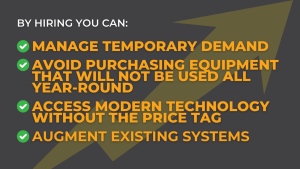
Short-term compressor rental provides a practical, cost-effective way to support increased workloads without investing in permanently oversized systems. Rental solutions allow businesses to:
- Add extra compressors to manage temporary compressed air demand
- Avoid purchasing higher-capacity equipment that will not be used year-round
- Access modern VSD and energy-efficient units to reduce operating costs
- Supplement existing systems with temporary dryers, filters, and receivers
This approach ensures your operation has the right level of capacity for peak periods while maintaining system stability.
-
Financial and Operational Benefits
Incorporating seasonal compressor hire into your operation provides several practical advantages, particularly for businesses with fluctuating demand. It removes the need for capital expenditure on equipment that is only required for part of the year, while offering the flexibility to scale compressed air systems up or down in line with seasonal workloads.
By reducing reliance on owned assets during peak periods, wear and ongoing maintenance costs are also minimised. Hire costs remain predictable and manageable, aligning closely with seasonal production or campaign requirements. This approach allows businesses to maintain operational efficiency without carrying unnecessary long-term equipment overheads.
Seasonal industries benefit significantly from a flexible compressed air strategy. By combining permanent equipment with short-term compressor rental, businesses can meet peak demand compressed air needs without oversizing systems or increasing operational risk. Rental support offers a reliable way to maintain performance during seasonal peaks while keeping costs controlled and operations running smoothly.
Plan for peak demand without the long-term commitment — speak with our team today to secure seasonal compressor hire and keep your operation running efficiently.