
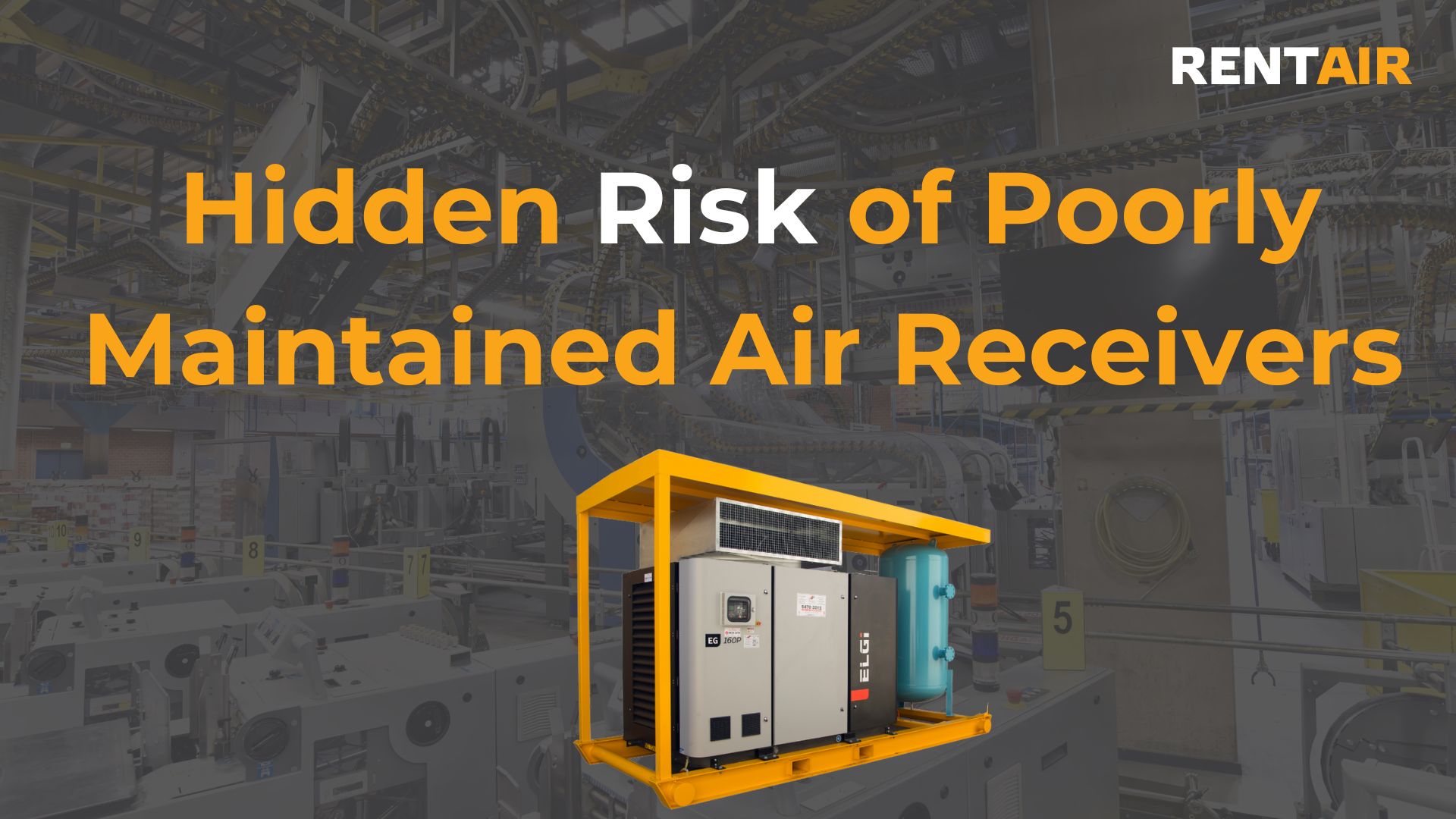
Air receivers are a fundamental part of any compressed air system, yet they are often overlooked until a safety incident or audit occurs. Poor compressed air tank maintenance increases the risk of non-compliance, system inefficiency, and in severe cases, vessel failure. Many AS1210 air receivers remain in service without proper inspection, meaning compliance issues can go unnoticed for years.
For workshop managers, manufacturing supervisors, safety officers, plant engineers, and anyone responsible for pressure vessel compliance, ensuring receivers are correctly maintained is essential to meeting regulatory and safety requirements.
-
Why Air Receiver Compliance Is Essential
Air receivers fall under strict pressure vessel regulations, including AS 1210 for design and AS/NZS 3788 for in-service inspection. These standards exist to prevent failures that can cause significant harm and operational disruption. Non-compliant vessels present:
- Increased risk of rupture or unsafe pressure build-up
- Reduced system efficiency due to restricted airflow or internal deterioration
- Regulatory consequences during audits or inspections
Regulators place strong emphasis on air receiver integrity because even minor faults can escalate quickly. Routine air receiver inspection is therefore critical for meeting obligations and ensuring pressure vessel safety.
-
What Can Go Wrong with Poorly Maintained Receivers
Without structured maintenance and regular internal assessments, air receivers can develop a range of issues, including:
- Internal corrosion caused by moisture and contaminants
- Faulty or incorrectly sized pressure relief valves
- Build-up of sludge, scale, and oil residues
- Fatigue, leaks, and weakened structural areas in ageing vessels
- Negative impacts on downstream equipment, filters, and dryers
These risks increase over time, particularly in high-demand or humid environments. Neglecting inspections not only compromises safety but also reduces system reliability and performance.
-
How Air Receiver Hire Reduces Compliance Risks
For many businesses, air receiver hire offers a practical way to maintain compliance without taking on the risks of ageing or poorly maintained equipment. Rental solutions provide:
- Fully maintained receivers that meet AS1210 air receiver standards
- Compliance documentation ready for audits and regulatory checks
- Correctly sized vessels to reduce cycling and improve system stability
- Verified PRVs and scheduled inspection history
Using compliant rental vessels eliminates uncertainty around inspection intervals, maintenance records, and regulatory obligations.
-
Operational and Financial Benefits
Maintaining pressure vessel compliance through rental equipment also delivers broader operational advantages, including:
- Reduced risk of unplanned shutdowns caused by vessel failure
- Improved workplace safety outcomes
- No capital expenditure for vessel replacement
- Assurance that compliance and maintenance are actively managed
This approach allows businesses to focus on production while ensuring their compressed air system remains safe and efficient.
Maintaining air receiver compliance is essential for safety, operational reliability, and meeting regulatory requirements. Proper compressed air tank maintenance ensures receivers perform as intended, while hiring compliant vessels provides a straightforward way to reduce risk without major investment. Air receiver hire supports businesses in Australia by offering safe, fully documented, and regulation-ready equipment that helps maintain pressure vessel safety across all operating environments.